

Imagine it’s 7:00 PM on a quiet evening, and your little one has finally drifted off to sleep, their tiny hand clutching a well-worn dummy. It’s a moment of peace that you’ve come to rely on, yet a small voice in your mind wonders if it’s time for a change. You aren’t alone in this feeling; many parents find themselves caught between the comfort of a settled night and the desire to protect their child’s developing smile. Learning how to wean baby off dummy doesn’t have to be a source of stress or lead to weeks of crying. With a patient approach, you can transition your child toward their next milestone with confidence and care.
We understand that the thought of removing a comfort object can feel daunting, especially when you’re worried about potential sleep regressions or dental health. It’s completely natural to feel a bit of guilt, but transitioning away from a dummy is a positive step toward healthy speech development and long-term wellbeing. This guide offers expert-led, gentle strategies that respect your child’s unique needs whilst maintaining your hard-earned sleep routine. We’ll explore practical methods, from gradual reduction to creative alternatives, that ensure your child feels secure and supported throughout this important transition.
Key Takeaways
- Identify the developmental “sweet spot” between 6 and 12 months to make the transition as smooth and natural as possible for your little one.
- Understand how reducing dummy use supports healthy dental alignment and encourages clearer speech development as your child grows.
- Discover the most effective strategies for how to wean baby off dummy by choosing between gradual reduction and “cold turkey” methods based on your child’s unique temperament.
- Learn how to introduce a new “comforter” and adjust your evening routine to provide the extra physical closeness your child needs during this change.
- Explore how the supportive environment of a nursery can use the “peer effect” and stimulating play to help your child confidently leave their dummy behind.
Understanding the Dummy Habit: When is the Right Time to Wean?
For many families, the dummy is much more than just a piece of silicone; it serves as a “transitional object” that provides a sense of safety and continuity when the world feels a bit too big. It’s the silent partner in your bedtime routine, offering immediate comfort during those restless midnight wakings. This emotional bond is often just as strong for parents as it is for the baby. You might feel a sense of anxiety about making a change, worrying that removing the dummy will disrupt the sleep routine you’ve worked so hard to establish. This feeling is completely valid, but it’s helpful to view weaning as a gift of independence rather than a loss of comfort.
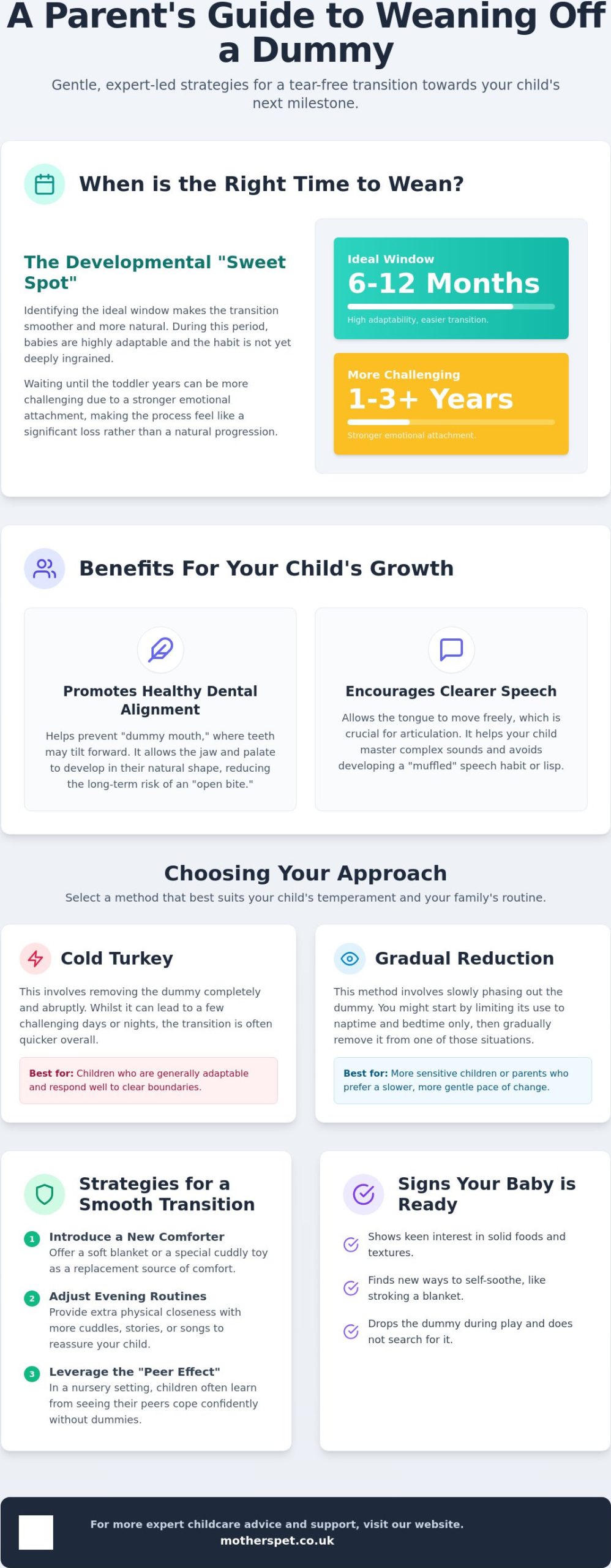
Finding the right moment for how to wean baby off dummy often involves identifying the developmental “sweet spot” between 6 and 12 months. During this window, babies are naturally curious and highly adaptable, and the habit hasn’t yet become a deeply ingrained part of their toddler identity. Waiting until the toddler years can make the process more challenging. Older children often develop a more stubborn emotional attachment to their “baba” or “soother,” making the transition feel like a significant life event rather than a natural progression.
The 12-Month Milestone: Why Timing Matters
Around the first birthday, a significant shift occurs in how your child interacts with their environment. They move from reflexive sucking to purposeful communication, experimenting with the sounds and rhythms of speech. Constant dummy use can physically block this “babbling” phase, potentially leading to the prolonged use of pacifiers which may impact how they form certain words and sounds. Additionally, health professionals often point to an increased risk of middle ear infections with continued use. The constant sucking motion can affect the pressure in the Eustachian tubes, which may lead to fluid build-up and discomfort for your little one.
Signs Your Baby is Ready to Let Go
Every child follows their own unique path, but there are often subtle cues that they’re ready to move on. You might notice your little one showing a keen interest in solid foods and exploring different textures with their mouth instead of just sucking. They may also begin to find new ways to self-soothe, such as stroking a favourite soft blanket or finding comfort in a cuddle. If you notice your baby is dropping their dummy during active play and not looking for it, they’re already showing you they can cope without it. Observing these small victories helps you feel more confident about how to wean baby off dummy whilst supporting their natural desire to grow and explore.
Why Ditching the Dummy Supports Your Child’s Growth
Transitioning away from a dummy is about more than just oral health; it’s about opening doors to new ways of communicating and connecting with the world. While the dummy provided a wonderful sense of security in the early months, moving beyond it allows your child to explore their physical and social capabilities more fully. This step forward helps them discover that they have the internal tools to feel safe and happy without needing a mechanical object for comfort.
Dental Health and Jaw Alignment
“Dummy mouth” is a term used to describe the orthodontic implications of long-term dummy use, where the constant pressure of a teat causes the front teeth to tilt forward or prevents the jaw from closing properly. Beyond the visible alignment of teeth, the palate, which is the roof of the mouth, can actually be reshaped by constant suction. This often results in a narrower, higher arch that may impact how the adult teeth eventually sit. While many parents opt for orthodontic dummies that are designed to be flatter and kinder to the gums, these still don’t entirely eliminate the risk of an “open bite” if used frequently beyond the first year. Helping your child move past this habit early allows their jaw and palate to develop in their natural, healthy shape.
Speech and Language Development
Clear articulation depends on the tongue’s ability to move freely and reach specific points against the teeth and the roof of the mouth. When a child frequently talks with a dummy in place, they often develop a “muffled” speech habit, as they have to talk around the teat. This can make it much harder for them to master complex sounds and may lead to a persistent lisp. Prioritising face-to-face time without a dummy encourages your little one to watch your mouth and mimic the sounds you make more accurately. If you’re looking for an environment that nurtures these early communication milestones, our baby nursery care provides a supportive space where speech and social play go hand in hand.
Beyond the physical benefits, learning how to wean baby off dummy fosters essential psychological growth. It encourages your child to develop independent self-soothing skills, such as finding comfort in a favourite soft toy or a gentle song, rather than relying on an external object. In a nursery setting, being dummy-free also opens up a world of social interaction. Without a dummy, children are more likely to engage in “serve and return” babbling with their peers, which is a vital foundation for building early friendships and emotional intelligence. This shift from a solitary comfort to social engagement is a beautiful part of their journey toward independence.
The Great Debate: Cold Turkey vs. Gradual Weaning
Choosing how to wean baby off dummy often feels like a crossroad between two distinct paths. There is no “right” way, only the way that feels most respectful to your child’s personality and your family’s needs. Adaptable babies, who transition easily between activities and seem unfazed by changes in routine, often thrive with a quicker, more decisive change. Conversely, more sensitive souls, who rely heavily on their dummy for emotional security, may benefit from a slower, more predictable journey that allows them time to process each step at their own pace.
Regardless of the method you choose, consistency is the foundation of success. It is vital that everyone involved in your child’s care follows the same plan. This includes grandparents, babysitters, and your nursery staff. If a child receives their dummy at nursery but not at home, it can lead to confusion and frustration, making the habit even harder to break. Openly communicating your strategy ensures your little one feels a sense of stability and safety across all their daily environments.
The Cold Turkey Method: Fast and Decisive
For younger babies, the “out of sight, out of mind” logic often works surprisingly well. This method involves removing the dummy entirely in one go, usually over a weekend when you have extra time for soothing. You should prepare for what experts call an “extinction burst.” This is a final, intense peak in crying as the child realises their usual comfort tool is gone. This peak usually happens around night two. Staying strong during this 72-hour window is key. Providing extra physical closeness, gentle swaying, and soft singing will help them through the peak without needing to reintroduce the dummy.
The Gradual Approach: A Gentle Transition
If a sudden change feels too overwhelming for your family, a gradual reduction allows you and your baby to take small, manageable steps. You might start by removing the dummy during car rides or active daytime play, eventually limiting its use only to the cot at night. Creating “dummy-free zones” in the house, such as the living room or kitchen, helps your child build confidence in their ability to play and interact without it.
For older toddlers aged 18 months and above, you can introduce imaginative concepts like the “Dummy Fairy” or a “Dummy Gift.” This involves your child “gifting” their dummies to a magical character or a new baby in exchange for a special book or a small toy. This gives them a sense of agency and pride in their growing maturity. Another effective middle ground is the “night-time only” compromise. This strategy acknowledges the dummy’s role as a sleep tool whilst encouraging independence during waking hours. Deciding how to wean baby off dummy using these gentle methods ensures the experience remains a positive milestone in their early years.
Practical Strategies for a Tear-Free Transition
Creating a sense of security during the transition is about filling the space the dummy left behind with warmth and new forms of connection. When you’re exploring how to wean baby off dummy, it helps to remember that your child isn’t just losing a habit; they’re learning to trust their own ability to settle. By introducing new comforts and adjusting your evening rhythm, you can make this change feel like a natural, positive progression rather than a sudden loss.
Introducing a New Comforter (The “Lovie”)
A soft toy or a small muslin can become a wonderful “transitional object” that provides the same emotional anchor as a dummy. To make this introduction successful, follow this simple five-step plan:
- Select safe materials: Choose a small, breathable item made from organic cotton or muslin that’s suitable for sleep.
- “Charge” the scent: Keep the toy against your skin for a few hours or sleep with it for a night. Your familiar scent will provide immediate reassurance to your baby.
- Daytime bonding: Introduce the toy during happy, relaxed times like feeding or story sessions so your child forms a positive association.
- Consistent presence: Place the toy in the cot at every nap and bedtime, encouraging your child to hold it while they settle.
- Secure a spare: Once your child shows an attachment, buy an identical “back-up” toy. This prevents a future crisis if the favourite is ever lost or needs a wash.
If you’re looking for a setting that values these gentle transitions, our toddler nursery program focuses on providing a nurturing environment where every child’s individual comfort needs are respected and supported.
Soothing Techniques That Don’t Involve Sucking
As the dummy is phased out, you may need to lean into other sensory ways to lower your child’s cortisol levels and encourage relaxation. Rhythmic patting on the bottom or a gentle hand placed on the chest can mimic the steady heartbeat they found so soothing as infants. Many parents find success by creating a “Sleepy Time” playlist of calm, instrumental music or using white noise to mask household sounds that might startle a settling baby. A short, gentle massage with baby-safe oil during the bedtime routine can also signal to their body that it’s time to rest, providing the physical closeness they might otherwise seek through sucking.
Some parents find the “hole in the dummy” trick effective. By snipping the very tip of the teat or pricking it with a sterile needle, the vacuum seal is broken. This makes the sucking sensation far less satisfying, often causing the child to lose interest on their own. However, safety is paramount. If you choose this method, you must inspect the dummy before every single use to ensure the silicone isn’t tearing further, which could create a serious choking hazard. Managing the “dummy hunt” during night-time wakings requires patience; instead of reaching for the dummy, try to offer a quick cuddle or a sip of water from a free-flow cup to help them reset before drifting back to sleep.
How Professional Childcare Supports the Weaning Journey
Weaning is a significant milestone in your child’s early years, and having a supportive community around you makes the entire process much smoother. When you’re considering how to wean baby off dummy, your childcare provider becomes an invaluable ally in maintaining consistency and providing emotional support. At Mother’s Pet Nursery, we view ourselves as dedicated partners in your child’s growth, offering a structured yet gentle environment that encourages independence. We understand that every child is unique, so we work alongside you to ensure the transition feels like a natural step forward rather than a hurdle.
The Benefit of a Stimulating Nursery Environment
One of the most powerful tools in a nursery setting is the “peer effect.” Children are naturally observant and often feel inspired when they see their friends playing, laughing, and eating without a dummy. This social motivation often makes the transition feel less like a loss and more like joining the “big kids.” Our sensory play sessions and group activities in Queensbury are carefully designed to keep little minds curious and little hands busy. Whether they’re exploring messy play, building with blocks, or joining in a song circle, these engaging moments provide a natural and joyful distraction from the habit. Our staff use positive reinforcement to celebrate every dummy-free achievement, building your child’s confidence through gentle praise and encouragement.
Partnering with Your Nursery Staff
A unified approach between home and nursery is the foundation for a successful transition. We believe in open communication to ensure that the strategies you’ve chosen are mirrored within our setting. If you’ve decided on a gradual reduction, we can ensure the dummy is only offered at specific, agreed-upon times, such as during quiet rest periods. Our team is highly experienced in managing nap times without dummies, using alternative soothing techniques like soft, rhythmic music or quiet story time to help children settle. This consistency across both environments reduces confusion and helps your child feel secure in their new, dummy-free routine.
Beyond the daily routine, we use the Early Years Foundation Stage (EYFS) framework to carefully monitor each child’s speech and language progress. By observing how your child interacts and vocalises during play, we can provide you with valuable feedback on their articulation and social engagement. This professional oversight gives you peace of mind that your child is meeting their developmental milestones whilst learning how to wean baby off dummy in a way that feels safe and encouraging. We invite you to book a visit to Mother’s Pet Nursery to see our nurturing environment in action and discuss how we can support your family through this important transition.
Embracing Your Child’s Next Chapter of Independence
Moving beyond the dummy is a significant milestone that marks your child’s growing confidence and blossoming communication skills. Whether you choose a gradual reduction or a swifter transition, the key is to replace mechanical comfort with extra physical closeness and new, safe comforters. By understanding your child’s unique temperament and staying consistent across all caregivers, you can navigate how to wean baby off dummy with patience and heart. This journey is a gentle step toward their future independence and healthy development.
At Mother’s Pet Nursery, we are here to walk this path with you. Our safe and stimulating environment is designed for babies from 9 months old, providing a nurturing foundation where they can truly thrive. With our Ofsted-registered high-quality childcare and expert EYFS-trained staff in Queensbury, we ensure every child feels secure and encouraged as they reach these important developmental goals. We invite you to join the Mother’s Pet family and give your child the best start in Queensbury. You have all the tools you need to support your little one through this change, and we’re honoured to be a part of your family’s journey.
Frequently Asked Questions
Is it better to wean off the dummy “cold turkey” or gradually?
Both methods have merits; the choice depends entirely on your child’s personality and your family’s needs. Cold turkey is often faster, usually taking about three nights for the initial intensity to subside. Gradual weaning is a gentler alternative for sensitive children, allowing them to slowly adjust to life without their comfort object. Consistency is the most important factor in either approach to ensure your little one feels secure throughout the process.
Will my baby’s sleep be permanently ruined if I take the dummy away?
Your baby’s sleep won’t be permanently ruined, though you should expect a few nights of disruption as they adjust. Most children learn to self-soothe using other methods, such as stroking a blanket or finding a comfortable position, within a week. While the initial nights can feel challenging, the long-term benefit is a child who can drift back to sleep independently without needing you to find a lost dummy in the dark.
What is the best age to start weaning a baby off their dummy?
The ideal window for how to wean baby off dummy is between 6 and 12 months of age. At this stage, babies are adaptable and haven’t yet developed the strong emotional “toddler” attachment to the habit. The NHS recommends stopping dummy use by 12 months to support healthy speech and dental development. Starting during this sweet spot often makes the transition much smoother and more natural for everyone involved.
Can using a dummy cause long-term dental problems for my child?
Prolonged dummy use can lead to orthodontic issues like an “open bite” where the front teeth don’t meet properly. While the American Academy of Pediatrics notes that the bite often corrects itself if the habit stops before permanent teeth arrive, early weaning is still preferable. Stopping by age one reduces the risk of palate reshaping and ensures your child’s jaw develops in its natural, healthy alignment as they grow.
How can I help my baby settle at night without their dummy?
You can help your baby settle by introducing a new, scent-charged comforter and using rhythmic patting for reassurance. Creating a calm environment with white noise or soft music helps signal that it’s time for rest. If you’re wondering how to wean baby off dummy at night, providing extra physical closeness during the bedtime routine can lower their cortisol levels and help them feel safe as they drift off to sleep.
What should I do if my baby starts sucking their thumb instead?
Don’t worry if your child briefly explores thumb-sucking; it’s often a natural, temporary replacement for the dummy. Focus on gentle distraction during the day by keeping their hands busy with sensory play or creative activities. Most children eventually grow out of this phase as they develop other ways to feel secure. If the habit persists into the preschool years, you can then seek professional advice from your dentist or health visitor.
How long does it typically take for a baby to forget about their dummy?
Most babies will significantly settle and begin to forget their dummy within three to seven days. The first 48 to 72 hours are typically the most challenging as they process the change and look for their usual comfort. Older toddlers may take slightly longer, perhaps up to two weeks, because they have a more conscious attachment to the object. Staying patient and providing consistent comfort during this short window ensures a successful transition.
How do nurseries handle dummy weaning for babies in their care?
Nurseries support weaning by working closely with parents to mirror the routine you’ve established at home. Staff use the “peer effect,” where seeing other children playing without dummies encourages babies to do the same. We often limit dummy use to specific rest periods and use engaging, stimulating play to distract them during the day. This collaborative approach ensures your child feels supported and confident throughout their nursery journey.